|
Paris Hosts 2019 International ArtScience Olympiad (IASO), Advancing Global Dialogue Between Science, Art, and Youth InnovationPUBLISHED: AUG 21, 2019, 4:52 PM
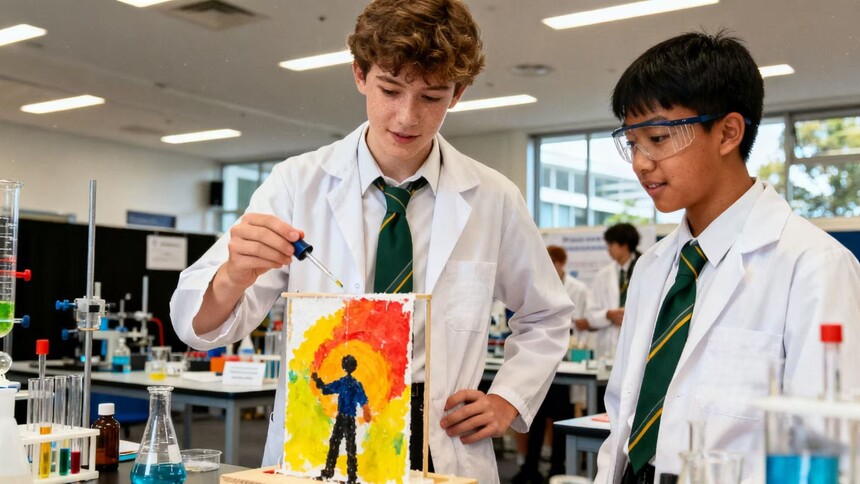
© IASO Organizing Committee / Olivia Miller | Two students create an artwork through experimental methods at the 2019 International ArtScience Olympiad. Paris, France – The 2019 International ArtScience Olympiad (IASO), also known as the International Olympiad ArtScience Contest (IOASC), concluded successfully at the IASO visit center in Paris from August 13 to 15. The event brought together 93 outstanding young talents from 15 countries and regions, forming 15 international teams that presented a dazzling showcase of innovation where technology met aesthetics in the heart of the “City of Romance.”
This year’s IASO revolved around the theme “Light and Life” Compared with the previous edition, the competition expanded its scope with four core categories: Biological Light and Shadow Art, Intelligent Material Sculpture, Algorithmic Music Creation, and Sustainable Development-themed Installations. These categories comprehensively tested participants’ interdisciplinary thinking, creativity, and ability to merge scientific knowledge with artistic expression. Around 70 excellent entries from the IASO, plus 25 invited works, were showcased at the subsequent International Olympiad ArtScience Exhibition held from August 16 to 21. Highlights included immersive light-and-shadow installations responsive to human brainwaves and “living art plants” cultivated through gene-editing technology. According to the IASO Organizing Committee, the six-day exhibition attracted 31,00 visitors, with over 40% being professionals from academic, design, and technology sectors.
To promote deeper cultural and academic exchange, the IASO Organizing Committee curated a series of study tours and workshops. Three themed learning routes led participants to world-class institutions such as the European Organization for Nuclear Research (CERN), the Louvre Museum, and ESPCI Paris (École Supérieure de Physique et de Chimie Industrielles de la Ville de Paris). Participants gained firsthand exposure to cutting-edge technologies and heritage conservation achievements—from the Higgs boson detector to ancient mural restoration techniques—enhancing their understanding of how science and art intersect in real-world innovation. |